Over 50% of ERP Implementations Fail. Here's How We Beat the Odds.
Delivery failures are really your opportunity and ours to improve.
By simplifying implementation projects, Odoo transforms businesses and connects all departments within a company. That means a lot of change, and a lot of trust placed in us to improve everyday work.
Over the past 5 years, more than 95% of our implementations have been successful, which sets us apart from the competition.
To get to that 95%, we critically analyzed our approach and the role of our project managers. By refining our methodology and analyzing our projects in detail, we understood what makes some more successful than others.
This guide covers the best practices and all the tricks we've learned.
Key Elements
– Accountability: our top priority is always to stay on schedule and within the agreed budget. The client defines the why and the what, and we are responsible for the how, which is how we measure satisfaction.
– Simplicity: by limiting the number of project participants, we ensure faster response. Fewer meetings and less paperwork lead to faster decisions.
– People: training key people early on contributes to the success of the project.
– Project manager: the project manager is the key factor in every implementation, so we focus on hiring and training the best talent.
To prevent misunderstandings or noise in the communication channel, we review the project at every key step to ensure a complete and successful implementation.
What Makes a Project Successful?
The key priority for a successful project is getting the client up and running on Odoo on time and within the agreed budget.
Sometimes it is hard to find the balance between satisfying the client, handling multiple change requests, and keeping the agreed project scope.
Customer Satisfaction Alone Isn't a Useful KPI.
Although it sounds controversial, satisfaction changes throughout the different phases of a project, and each person involved may have different expectations depending on their position or the different needs Odoo has to meet.
Clear communication of the scope and of the problems the implementation solves is key to the success of any project.
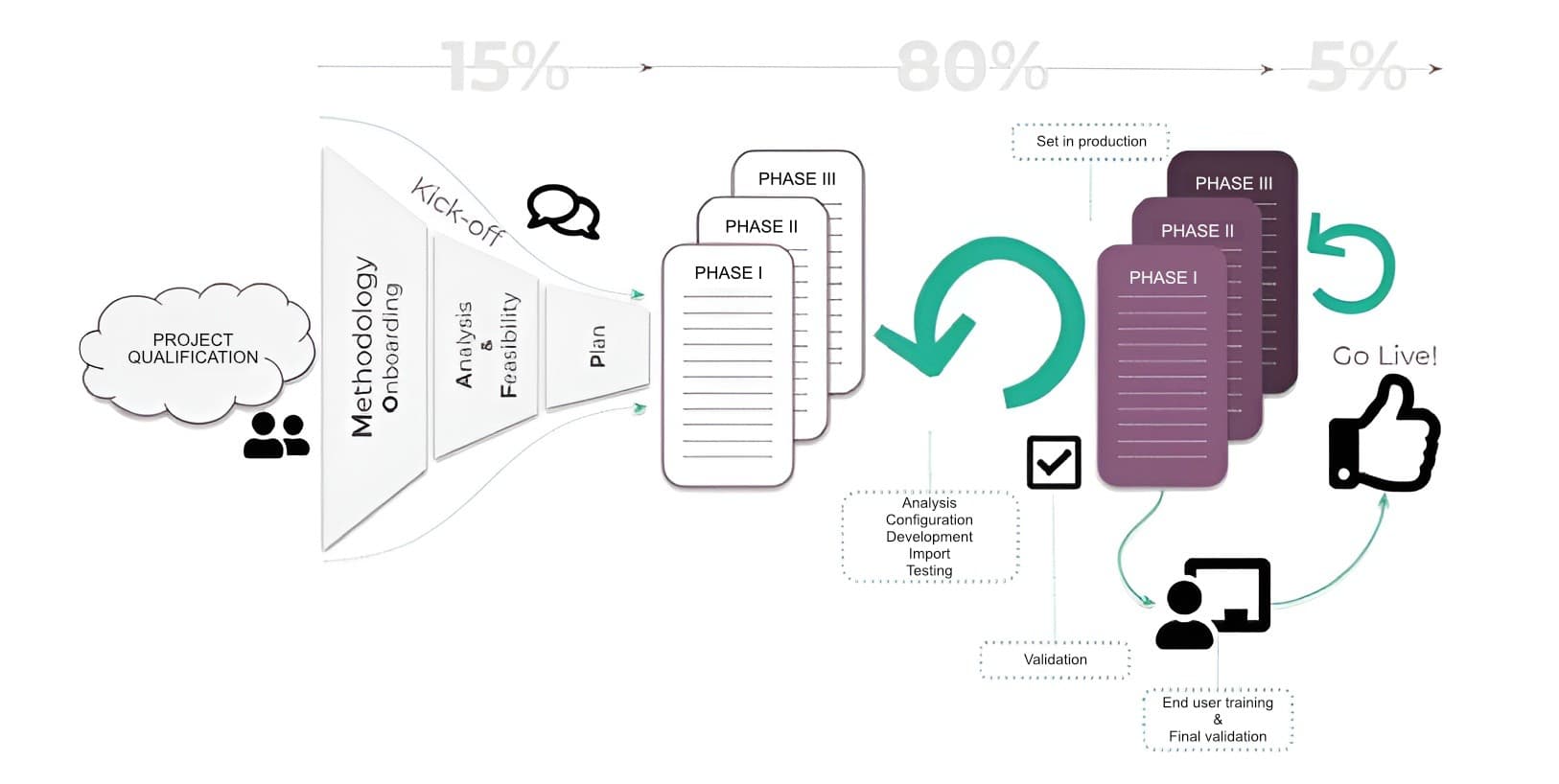
Phases
– ROI analysis: detailed analysis and budget.
– Kick-off meeting: aligning all participants and the methodology.
– Implementation: a series of stages and the longest period: development, validation and training of key users, bug fixes.
– Go-live: it doesn't have to be perfect, but it must be stable, functional, and make business sense.
– Second implementation: expanding the project scope and adding new features.
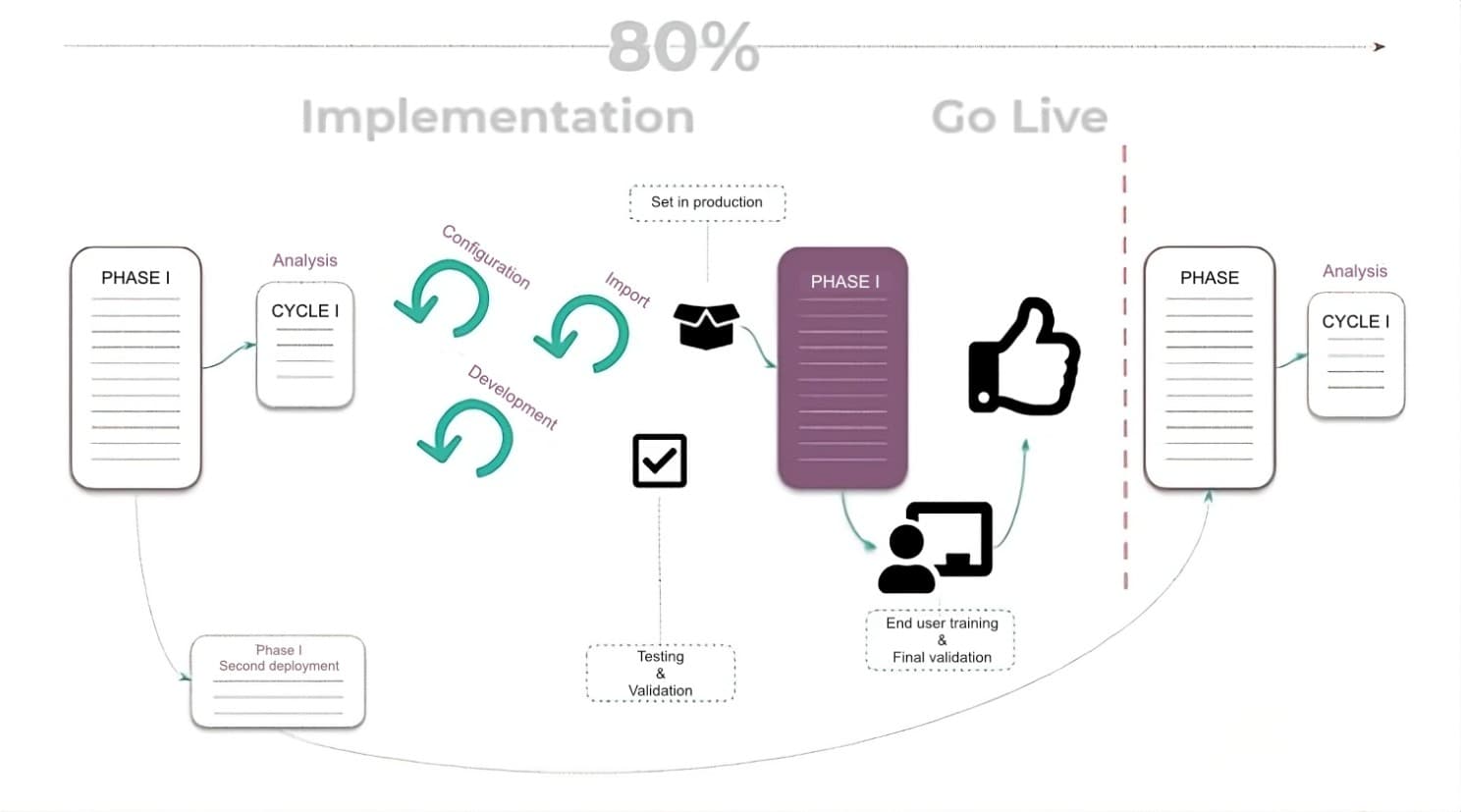
"The whole process starts by running the key business processes through Odoo, which ensures that the foundation of the system works in practice. Automation follows, to achieve concrete results and time savings. Only once the processes and automations are stable do we move on to nice-to-have features and additional customizations. Gold plating, meaning extra polish beyond actual needs, is not a prerequisite for a successful go-live. What matters most is that the system supports the core processes and delivers real value from day one, while additional features can be introduced continuously after launch. — Bruno Ivanjko, Team Lead at Notus"
Our goal is not just to implement Odoo successfully, but to make sure every change brings real value to your business. Together we build a system that not only works, but grows with you. So let's get started: simply, responsibly, with the best team behind every step and phase!
Contact us and let's move toward a successful implementation together.

Notus