Vodostaji: An Inside Look at Building the App
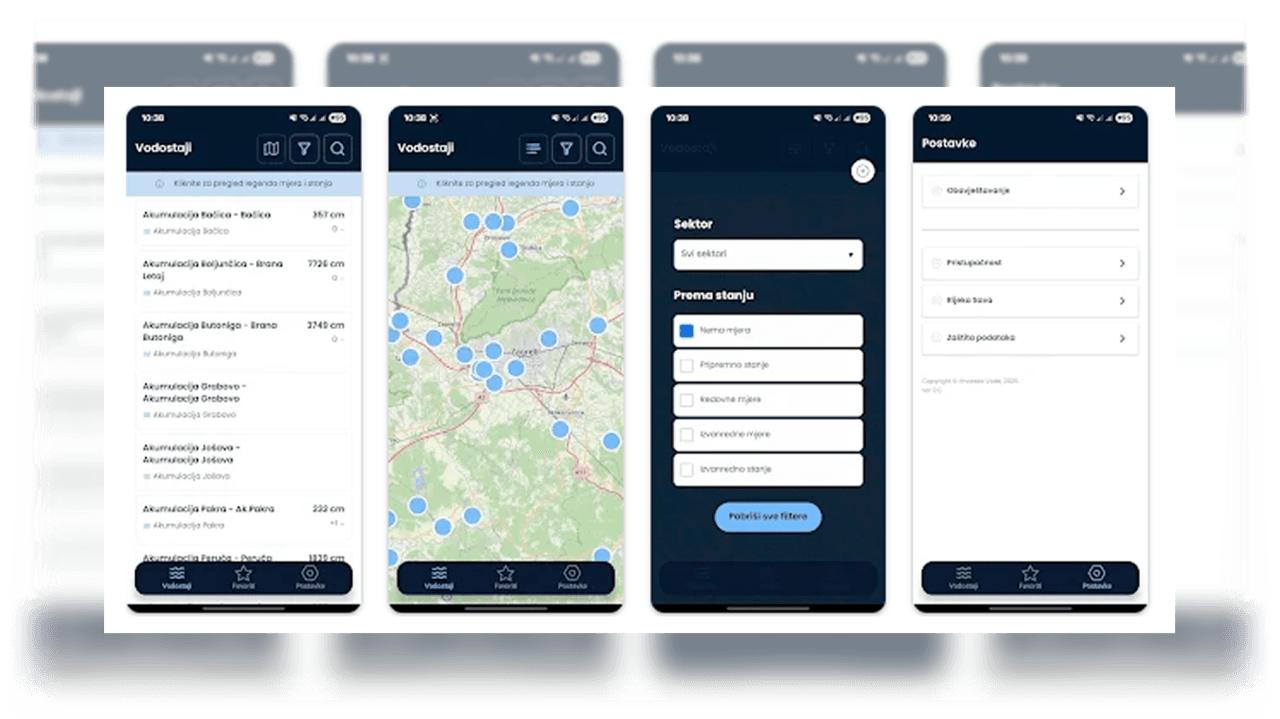
Working on the Vodostaji app was a great example of how technical precision, agile collaboration, and user focus come together in a public sector project.
At first glance the app looks simple: it tracks water levels and sends alerts. But behind it lies a series of carefully considered decisions that made the system compact, reliable, and practical for a broad range of users.
Planning and the Initial Phase
The project started with a clear idea: the old Hrvatske vode app no longer met modern standards and user needs, so the goal was to create a new platform that is simple, fast, and stable.
"From the start we had a clear vision and documentation, which allowed us to focus on the technical implementation and user experience rather than constant changes mid-project. — Kristina Kobrehel Preskar"
Technical Architecture and Integration
One of the key decisions was to use Hrvatske vode's existing data.
"We didn't have to develop our own algorithms for measuring water levels, so we could focus on making the data available in real time, filtered and visualized in a way that's useful to everyone, from anglers to institutions. — Belizar Karlović"
Integration with external systems was a technical challenge: data comes from different measuring stations, at different intervals and in different formats, so it was necessary to design a stable backend that continuously collects, processes, and distributes information to the app on Android and iOS platforms.
Reliability and Scalability
The system was designed with a focus on a high number of simultaneous users, for example during floods or emergency measures.
"We carried out load testing, which means we simulated a large number of users accessing the app at the same time, to verify that the system can handle the load without slowing down or losing data. This is crucial when it comes to public information of vital importance. — Kristina Kobrehel Preskar"
Designing for Real Users
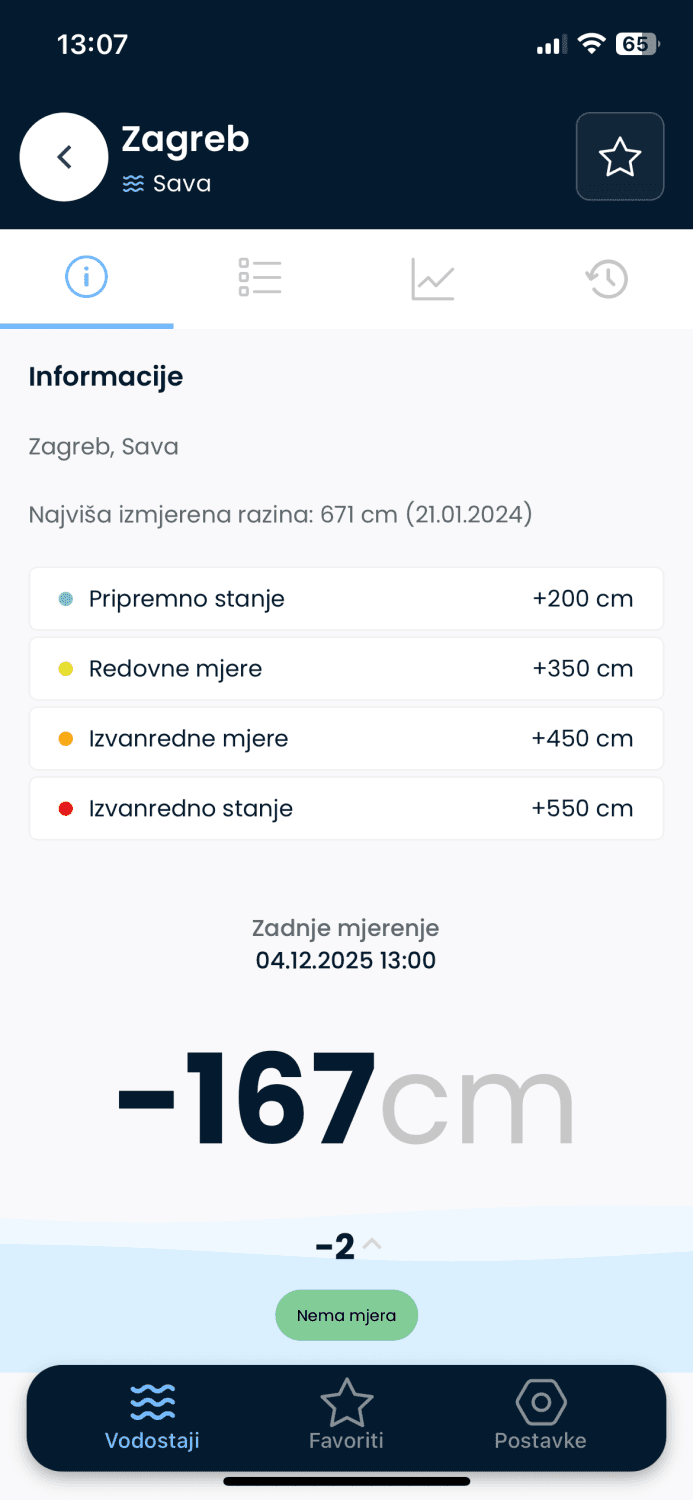
The user interface wasn't created in a vacuum. We worked with different types of users, from experts and institutions to citizens. All design decisions were based on simplicity: the most important information must be visible immediately, while additional features such as graphs, historical data, and favorites allow deeper analysis for users who need it.
"We focused most on making the app intuitive. Information is all around us, it just needs to be organized and presented in a way that is clear but also engaging. — Belizar Karlović"
Collaboration and Team Organization
The project was an example of how good communication can remove obstacles. Collaboration with our partner Perpetuum Mobile and experts from Hrvatske vode was constructive, with a clear division of responsibilities.
"Understanding how the field and technical services work was key to making the system truly work for all users. — Kristina Kobrehel Preskar"
Lessons and Challenges
The biggest challenges were organizational and communicational, typical of public sector projects where decisions are often structured and require precise alignment with procedures, and every feature must be well justified. On the technical side, the challenge was designing a backend that can process data in real time and distribute it to different user scenarios.
"Patience is key. Sometimes it feels like a project is taking a long time, but it's important to make the right decisions and stay focused on the quality and stability of the system. — Belizar Karlović"
What This Project Shows
For developers and project managers, Vodostaji illustrates several important things:
– Clearly defined specifications at the start reduce the risk of changes during development.
– Collaboration with users and partners is key to a quality product.
– Technical robustness and scalability must be planned from the very beginning, especially for systems of public interest.
– A simple UI can be technically challenging when it has to bring together a large amount of real-time data.
"The greatest value of this project is not just the finished app, but the foundations we've established for all future projects. — Kristina Kobrehel Preskar"
Through this project, the team learned how to organize information and present it in a way that is clear and engaging for the end user, while at the same time developing a reliable and scalable technical system. As we talked and recalled all the steps of development, we almost shed a tear when Belizar remarked, "I'm proud of Kristina!", after which we all burst out laughing.

Notus